
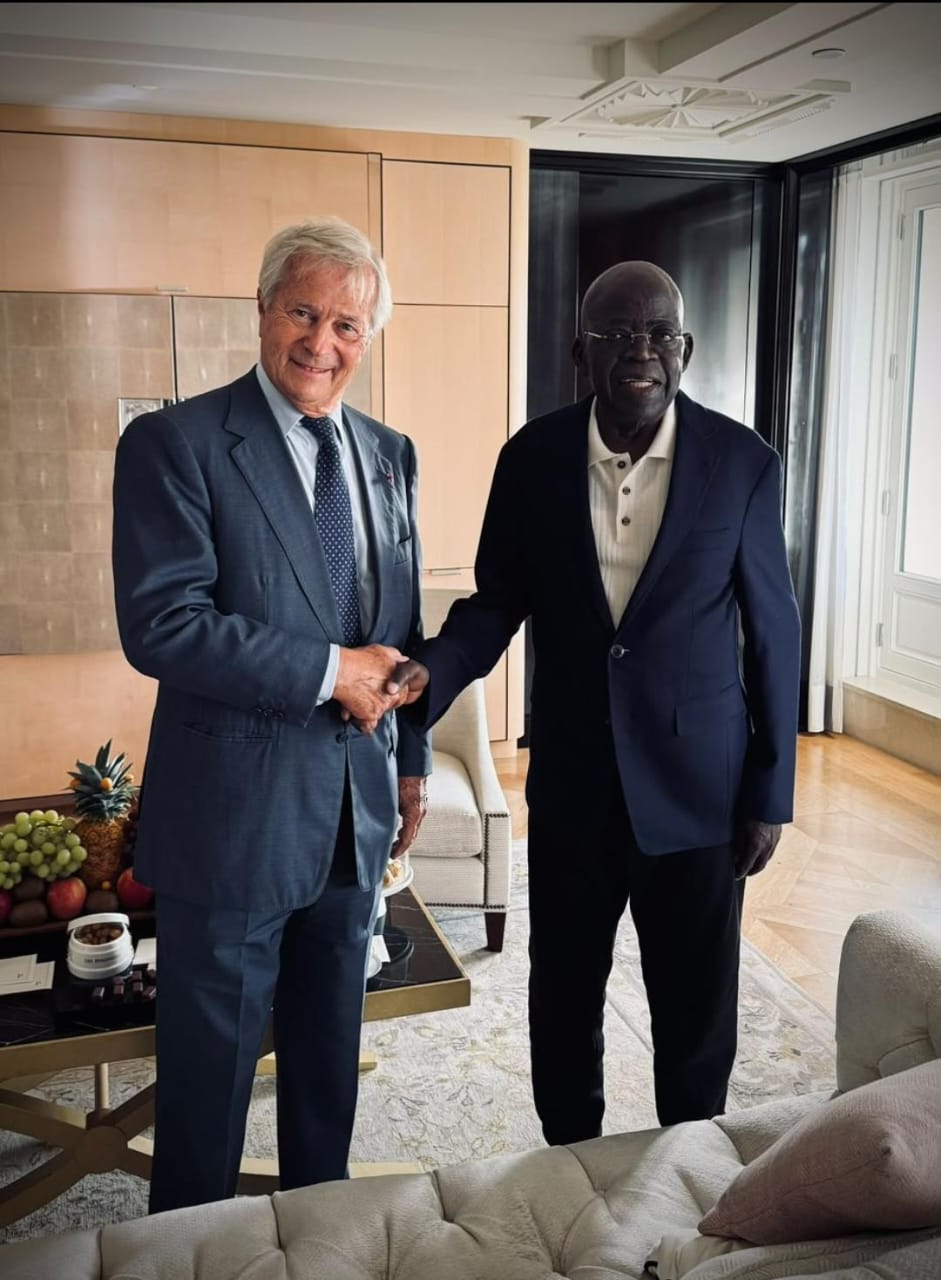
Image: State House of Nigeria . Copyright remains with the respective owner.
A high-profile meeting between President Bola Tinubu and French businessman Vincent Bolloré signals fresh investment ambitions for Nigeria's film, entertainment and digital industries. Could this be a turning point for Nollywood's future?
Nollywood has already conquered an extraordinary challenge: convincing the world that Nigerian stories deserve a place on the global entertainment stage.
From independent productions to international streaming platforms, Nigerian filmmakers have built an industry whose cultural influence stretches far beyond Africa.
But as Nollywood's global recognition continues to grow, a different question is becoming increasingly important: how can Nigeria transform its creative success into lasting investment, sustainable employment and stronger local production capacity?
A September 18, 2026, meeting in Paris between President Bola Ahmed Tinubu and French businessman Vincent Bolloré has brought that question into sharper focus.
According to an official statement from Nigeria's State House, Bolloré and a delegation of executives outlined plans to deepen the localisation of operations in Nigeria across film, entertainment, fibre-optic infrastructure and related sectors.
The discussions represent a potentially significant development for Nigeria's creative economy, although the specific projects and financial commitments have yet to be publicly detailed.
A Paris Meeting With Big Ambitions for Nigerian Entertainment
The meeting took place during President Tinubu's working vacation in Paris, where he held discussions with Bolloré and members of his delegation about expanding business activities in Nigeria.
The State House identified media and digital interests associated with the group, including Canal+, MultiChoice and Universal Music Group.
These names are significant because they represent different parts of the global entertainment ecosystem, from television and content distribution to music.
However, the official announcement did not identify individual investment agreements involving these companies.
What it did establish was the delegation's intention to deepen its involvement in Nigeria, particularly through greater localisation of business activities.
According to the government statement, the delegation described Nigeria as an important force in Africa's cultural renaissance, pointing to the international popularity of Nollywood and Afrobeats.
For an industry that has spent decades building its international reputation, the recognition carries considerable symbolic importance.
But the larger opportunity lies in what might happen after the conversations end.
Why Localisation Could Change the Future of Nollywood
International investment is not new to Nigerian entertainment. What makes the latest discussions particularly interesting is their emphasis on localisation.
In practical terms, localisation means developing more business activities, services and capabilities within Nigeria rather than relying primarily on operations based elsewhere.
For Nollywood, deeper local investment could potentially strengthen the industry in several important ways.
Nigerian filmmakers could benefit from improved access to production infrastructure, professional training and partnerships with established entertainment businesses.
Local production companies might also find opportunities to expand their technical capabilities, while emerging professionals could gain exposure to more sophisticated production and distribution systems.
Perhaps most importantly, investment that creates lasting local operations could help Nigerian creative businesses retain a greater share of the value generated by their work.
These possibilities are encouraging, but they remain potential outcomes rather than confirmed elements of the delegation's investment programme.
Beyond Film Sets: The Digital Infrastructure Connection
One of the most interesting details in the State House announcement is the inclusion of fibre-optic infrastructure alongside film and entertainment.
At first glance, telecommunications infrastructure may seem removed from filmmaking.
Yet the modern entertainment industry increasingly depends on reliable digital systems.
Film producers collaborate across countries, editors transfer large video files, streaming services deliver content to millions of viewers, and independent creators use online platforms to reach audiences directly.
For Nigerian filmmakers, improvements in digital connectivity could support more efficient production workflows and stronger connections to international markets.
This is particularly relevant to Nollywood's growing digital audience, including viewers discovering Nigerian films through YouTube and other online distribution channels.
While the announcement does not establish a direct connection between the proposed fibre-optic investments and particular Nollywood projects, it highlights the increasingly close relationship between technology and creative industry growth.
Will Nigerian Filmmakers See the Benefits?
For all the excitement surrounding international investment, an essential question remains: who will ultimately benefit?
Nollywood's success has been driven by generations of actors, directors, screenwriters, producers and entrepreneurs who have developed an industry under challenging circumstances.
The industry's international appeal creates commercial opportunities, but sustainable growth requires more than foreign companies recognising the value of Nigerian audiences.
Meaningful investment should ideally strengthen the people and businesses responsible for creating the content itself.
That could involve partnerships with independent Nigerian producers, investment in technical training, improved access to distribution channels and support for locally owned intellectual property.
It could also mean expanding opportunities for professionals whose contributions are less visible to audiences, including cinematographers, sound engineers, editors, production designers and other technical specialists.
Ultimately, the value of any future investment will depend on its structure, implementation and measurable impact on Nigerian creative businesses.
What Has Actually Been Confirmed?
Despite the encouraging direction of the Paris discussions, it is important to distinguish between an investment announcement and a completed investment.
The September 18 State House statement confirmed that Bolloré and his delegation discussed plans to deepen localisation across film, entertainment, digital infrastructure and related sectors.
However, the statement did not disclose a specific investment amount.
It also did not identify particular film productions, announce the construction of new studios, establish a confirmed number of jobs or provide a binding project completion timetable.
There was no detailed breakdown of which Nigerian companies might participate or where the proposed activities would be located.
These omissions do not mean the plans lack potential. They simply mean the most important commercial details remain undisclosed.
For Nollywood professionals, the developments worth monitoring will be confirmed project announcements, financial commitments, local partnerships and operational milestones.
Those details will provide a clearer indication of how international business interest might translate into tangible opportunities.
President Tinubu's Creative Economy Ambitions
The Paris meeting also reflects the Nigerian government's broader ambition to position the creative and digital economy as a contributor to national economic development.
President Tinubu welcomed the delegation's plans and emphasised his administration's interest in attracting investments that support employment, talent development and stronger infrastructure.
The government's position is that Nigeria's expanding cultural influence should translate into more production activities, economic opportunities and jobs within the country.
That objective resonates with an increasingly important conversation about Nollywood's future.
The challenge is no longer simply demonstrating that Nigerian films can attract global attention.
It is developing an economic environment in which Nigerian filmmaking businesses can grow, compete internationally and build lasting institutions.
From International Recognition to Local Ownership
Perhaps the most important conversation surrounding the proposed investments concerns the balance between international partnerships and local ownership.
Foreign capital and expertise can offer meaningful advantages, especially when they improve infrastructure, expand professional capabilities and open new markets.
But the long-term health of Nollywood also depends on the ability of Nigerian filmmakers and companies to maintain creative independence and participate fairly in the commercial value of their productions.
For independent producers, access to investment should ideally create greater opportunities to develop original stories rather than limit the industry to projects selected primarily for outside commercial interests.
For actors and technical professionals, sustainable employment and skills development are equally important.
And for Nigerian audiences, stronger investment could eventually support a wider range of films, genres and viewing experiences.
The most successful partnerships would therefore be those that combine international resources with meaningful Nigerian participation.
Nollywood's Next Chapter Could Be About More Than Movies
There is something particularly compelling about this moment in Nigerian entertainment.
Nollywood has already demonstrated the power of telling stories rooted in local experiences while speaking to universal emotions.
The popularity of Nigerian cinema has helped establish the country's identity as a creative force whose influence extends across continents.
Now, that cultural success is helping attract attention from international business interests looking at the wider opportunities within Nigeria's entertainment and digital economy.
The September meeting between President Tinubu and Vincent Bolloré does not guarantee a new era of film financing or production development.
What it does provide is another indication that Nigeria's creative industries are being discussed as serious areas for future investment.
Whether those discussions lead to stronger studios, new partnerships, better infrastructure or more employment opportunities will depend on the commitments that follow.
For Nollywood, the real measure of progress will not simply be how many international investors express an interest in Nigerian entertainment.
It will be how effectively that interest strengthens the filmmakers, businesses and professionals whose creativity made the industry valuable in the first place.
Nigerian stories have already travelled around the world. The next great achievement would be ensuring that more of the economic rewards return to the people and communities creating them.
Join the Conversation
Do you believe international investment could transform Nollywood into an even stronger global film industry?
Or should Nigerian filmmakers focus more on local ownership, independent financing and building homegrown production companies?
What would you most like to see international investors support: modern film studios, technical training, cinema infrastructure or better distribution opportunities?
Share your thoughts in the comments below.
Sources
Read the official announcement and supporting information:

No comments:
Post a Comment