
Image source: OYA Magazine. Copyright remains with the respective owner.
What happens when a child's greatest talent is the one thing nobody notices? A 12-year-old Nollywood filmmaker is challenging how society defines intelligence, achievement and success.
At just 12 years old, Nigerian actor, author and emerging filmmaker Fiyinfoluwa Asenuga is tackling a subject that even adults struggle to confront: Why do we sometimes judge a child's entire future by classroom grades?
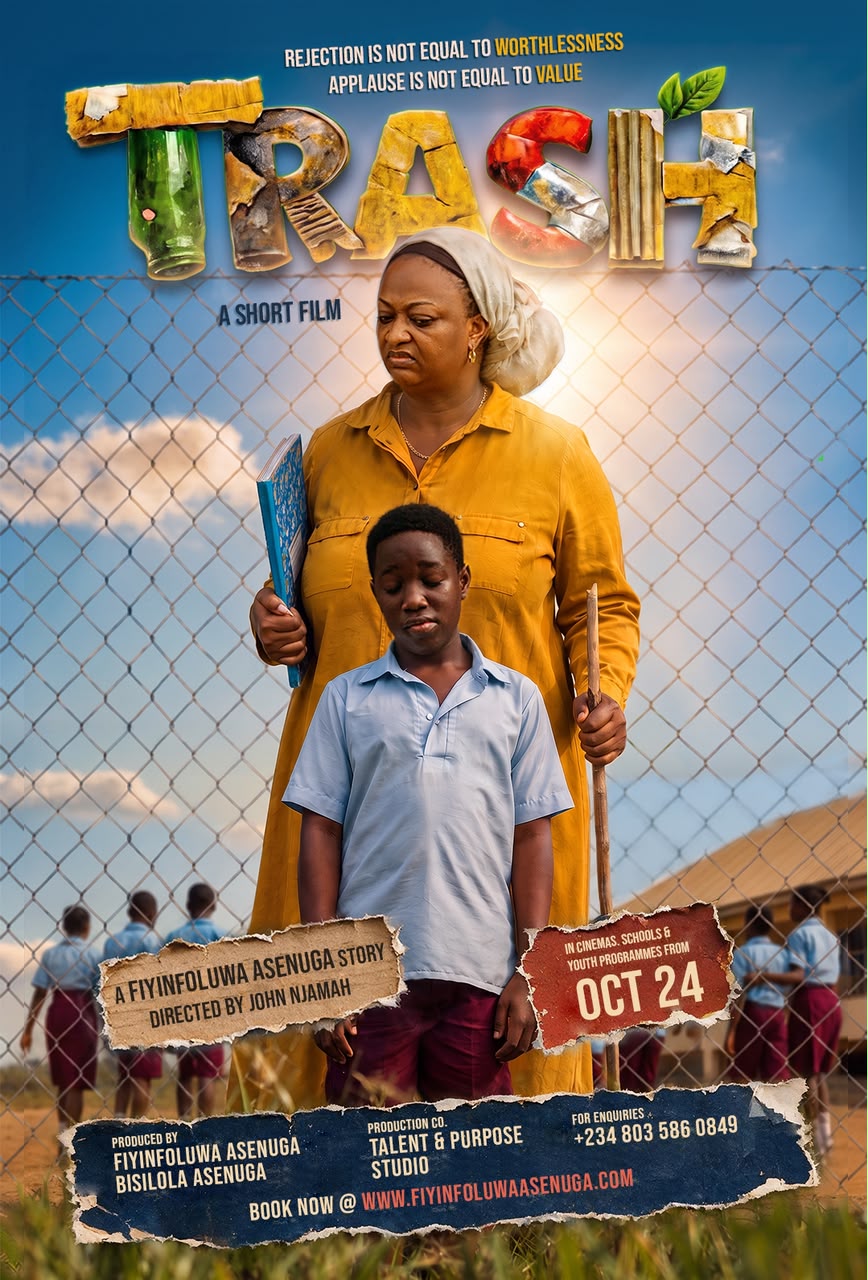
His short film, Trash, tells the story of Treasure, a gifted young boy whose creativity and extraordinary potential are overlooked because he struggles academically.
Rather than celebrating his abilities, the adults around him see his academic difficulties as evidence of failure. But what happens when the child everyone underestimates turns out to possess something remarkable?
That compelling question drives Trash, a thought-provoking Nigerian drama directed by veteran filmmaker John Njamah.
A 12-Year-Old With a Message Beyond His Years
Fiyinfoluwa is no stranger to Nollywood. The young performer has appeared in productions including Muri & Ko, House of Secrets and Finding Me. He is also an author and an advocate for children's creativity.
Now, with Trash, he is expanding his creative influence behind the camera.
According to OYA Magazine, Fiyinfoluwa wrote and co-produced the film alongside Bisola Asenuga through Talent and Purpose Studios. The project combines his youthful perspective with John Njamah's directing experience.
One of the film's most memorable messages is simple:
"What looks like waste may be treasure in disguise."
It is an especially powerful idea in a society where children can sometimes be defined by examination results before their other abilities have had the opportunity to develop.
When Academic Performance Becomes a Label
Imagine being exceptionally talented at painting, acting, inventing or storytelling, yet constantly being told that you are not intelligent because mathematics or another school subject is difficult for you.
That is the emotional territory Trash explores.
The film does not suggest that education is unimportant. Instead, it challenges the assumption that academic performance is the only meaningful measure of intelligence or potential.
It also raises an uncomfortable question: How many talented children lose confidence because the people around them focus on their weaknesses rather than their strengths?
The film's official website identifies self-worth, bullying, empathy and personal responsibility among the central themes it hopes young viewers will examine.
From the Cinema to the Classroom
Originally announced for an October 24, 2026 release, Trash was designed to reach beyond conventional cinema audiences.
The filmmakers have developed a school screening programme, including opportunities for students to experience the film at Filmhouse Cinemas in Lagos or through screenings hosted at participating schools.
The initiative also incorporates guided conversations and an Identity Workbook to encourage young audiences to reflect on their individual strengths.
The primary target audience is children and teenagers aged 8–18, although parents, educators and families are also encouraged to participate.
This educational approach could give Trash a life well beyond its running time.
Rather than simply entertaining an audience, the film aims to start discussions that continue at home and in the classroom.
Why This Young Filmmaker Deserves Attention
What makes Fiyinfoluwa's achievement especially interesting is that he is not simply starring in stories created by adults. He is becoming part of the generation of young Nigerian creatives who want to shape the stories being told.
At 12, he is participating in conversations about filmmaking, educational expectations and personal identity that could resonate with audiences much older than himself.
For Nollywood, Trash also demonstrates how a short film can become a starting point for broader social conversations.
Its lasting impact will depend on the audiences it reaches and the discussions it inspires.
However, its central message is already worth considering: A child who struggles in one area may still be exceptionally gifted in another.
Join the Conversation
Here is a question for Nollywood Spotlight readers:
If a child consistently struggles academically but demonstrates exceptional creative talent, should parents prioritise improving the child's grades or developing that natural gift?
And could films like Trash encourage Nigerian schools to rethink how they identify and nurture talent?
Share your thoughts in the comments below.
Sources
Source links used to research and verify this article:
OYA Magazine — Fiyinfoluwa Asenuga's Trash

No comments:
Post a Comment